Interview – Giving the Project a Main Voice
… remaining silent and pretending like nothing is wrong is exactly how things get worse.
Benjamin Neumann
Interview w/ Benjamin Neumann (Backtalk, Phobia)
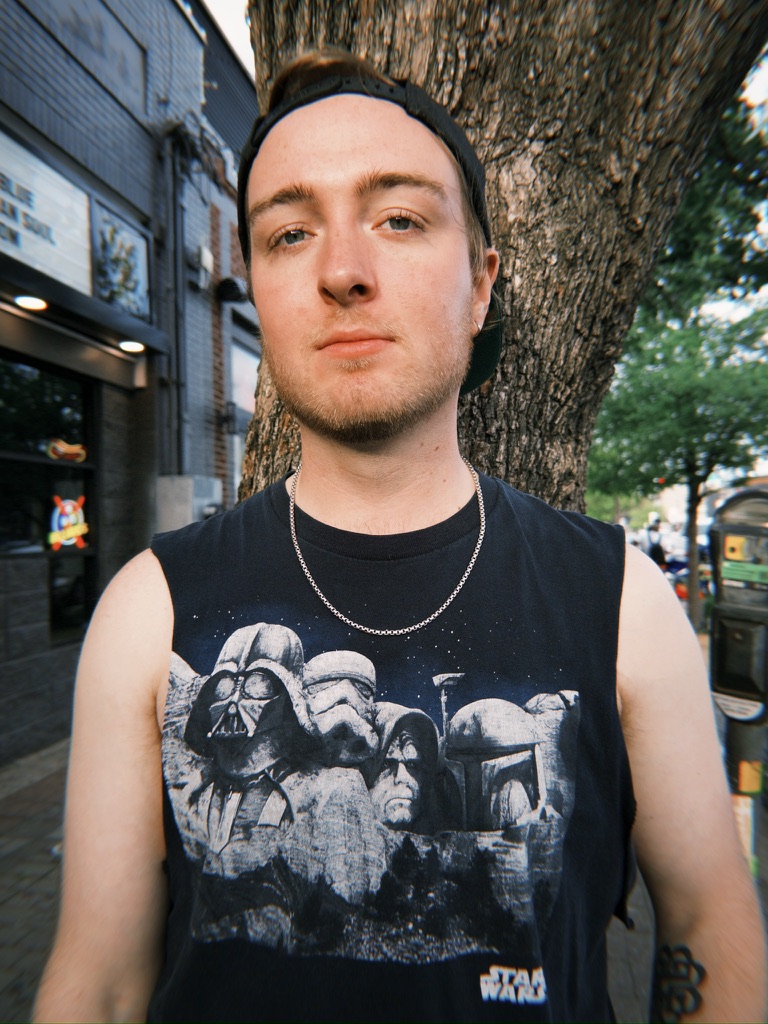
The metal scene has no tolerance for intolerance.
Benjamin Neumann
Interview Information
- Name: Benjamin Neumann
- Date: April 19, 2026
- Interview Length: 25 Minutes
- Number of Transcribed Pages: 3 Pages
Transcript
Can you start by introducing yourself and your role in the DFW metal, rock, or punk scene?
Hi, I’m Benji Neumann. I have been playing shows in metal and rock bands, both original and cover bands, for about 10 years now. I’ve been in countless bands and have played hundreds of shows all around DFW. I’ve played guitar for two decades now and I sing a little bit too.
How did you first get involved in this music community?
I first started playing shows in DFW around 2015, but because I have played guitar for so long, I knew of a lot of people who were already very active in the scene by the time I was in high school. The high school I went to was centered around all different kinds of media arts including film, photography, graphic design, and most importantly to me, music.
What does the DFW scene mean to you personally?
The whole DFW music scene, and especially the metal music scene is just one huge community. There are so many people I’ve met at shows that have become lifelong friends, and almost all of the opportunities I’ve had musically have come from just going to shows. Most of the time, since I started a decade ago, I still see so many familiar faces any time I go to a show in DFW, which is nice.
How would you describe the DFW metal, rock, punk scene to someone who’s never experienced it?
Lots of people outside of the metal-slash-punk music scene might assume that these shows are crazy or violent, but what I’ve learned is that metalheads or punks actually tend to be the nicest people in any of the music scenes; despite what they may try to present with their music, in my experience, the heavy music scene, in general, seems to have much stronger feelings about protecting women, protecting minorities, and just having generally good principles and morals. Even though moshpits might look scary, if someone falls down, people are quick to make sure that they get up and they’re safe before continuing.
What makes this scene feel distinct from other music communities you’ve been part of or seen?
I think metal bands, a lot of times, are not nearly as shy speaking out against injustice. In fact, I think metal bands are often much less willing to be silent about such things, compared to other scenes that I have been in.
In your view, what values or attitudes define this constellation of subcultures?
One of the biggest attitudes in metal music, that I think is most prevalent, is that metal bands demand that people respect women. If someone is accused of disrespecting or abusing women, they’re blacklisted from the scene immediately. The same can be said about racism and any kind of prejudice. The metal scene has no tolerance for intolerance.
When you think about political expression in the DFW scene, what comes to mind?
The first thing that comes to mind is people yelling “fuck ice”, “fuck trump”, and “fuck fascism” on stage. The metal scene is more likely to speak truth to power than most others. When you go to a metal show, typically, you don’t have to worry that you’re going to upset someone who has conservative values, because they probably aren’t at the show. Which, for a lot of people, genuinely makes them feel safer.
Have you noticed bands or artists speaking out against fascism or political extremism during shows or online?
Yes, I’m in one. Stream our song Tempest. Although our singer doesn’t necessarily give explicit speeches against fascism on stage like some, our lyrics have a lot of anti-authoritarian messages and themes.
Why do you think some musicians in this scene feel compelled to address these issues?
I think it varies a little bit from each person, but if I had to guess, I’d say that metal music and its lyrics tend to describe people’s deepest struggles. For a lot of people, the politics of the world are a big part of their deepest struggles and anxieties.
How do you see audiences responding when bands make political statements on stage?
Overall, I would say positive because most of the people at these shows feel at least somewhat similarly about these issues and most of them feel just as passionately about them. There may be hecklers from time-to-time, but they usually get shut down pretty quickly by people in the crowd or on-stage. Like I mentioned before, this is a community of people with similar values, and everyone is welcome to join as long as they aren’t hateful.
Do you think the DFW region itself influences how musicians express resistance?
I think it plays a part. DFW as a metroplex is more populated than forty-five states in America, so I think the sheer volume of people living here makes for a pretty unique and large music scene.
How do you see musicians using social media to speak out or share political views?
There’s a lot you could say about that. For better or worse, being a musician in this day and age means that you have to be a full-time content creator if you ever want to get anywhere. A lot of bands who write songs with political themes like to make content that aligns with that image. Whether they are making memes or making serious posts about current events, or both, I see a lot of bands putting their music to videos that relate to what’s going on in the world.
Do you think online expression reaches people differently than on‑stage commentary?
Absolutely. With the internet, potentially millions of people could see how you feel about politics, whereas on-stage, it’s limited to people in the room. When you express your views online, you can reach like-minded people all over the globe, and they may even become fans and come to your shows because of your views.
Why do you think this kind of expression matters right now?
I’m a firm believer in the quote from Edmund Burke that says “the only thing necessary for the triumph of evil is for good men to do nothing”, and that remaining silent and pretending like nothing is wrong is exactly how things get worse.
Is there anything else you think people should understand about the DFW scene and its relationship to political resistance?
Lots of people, especially in the conservative world, wish that musicians would stop speaking up about how they feel politically. This kind of music has always been about rebellion against the status quo. And I think that’s especially important in the DFW area which is largely conservative. Because of the politics of this state and this region, I think it’s crucial to have such a music scene where people who don’t fit in to the dominant culture can find community and acceptance without worrying about bigotry.
What do you hope people take away from this project?
I hope people take away that this whole genre of music is about freedom of expression and freedom to simply be yourself.
 DFW Riffs of Resistance